
A useful car maintenance checklist starts with small observations you can repeat: tires, visibility, lights, warning messages, and changes in how the vehicle feels. These checks help you notice problems early and explain them clearly when you need professional help. They do not replace scheduled servicing or establish that a vehicle is safe to drive.
You do not need a garage full of equipment to build this habit. Keep your handbook, an accurate tire-pressure gauge, a cloth, and a simple record of what you find. Work with the vehicle securely parked, and follow its instructions whenever a check involves a component you are unfamiliar with.
Start with a slow walk around the car
Before you get in, look at the space around the vehicle. Notice objects near the wheels, anything caught underneath, damaged glass, and a door or hatch that has not closed properly. This is also a useful moment to check for children, pets, and obstacles that may disappear from view once you sit down.
Look for a change, not a diagnosis
A fresh mark under the car, a visibly low tire, or a loose piece of trim deserves attention. However, appearance alone rarely identifies the cause. Record what you see and where you see it. A photograph taken while safely parked can help a technician understand an intermittent concern.
Make the walk-around specific to your parking space. If you reverse past a bicycle rack or leave through a narrow driveway, check those areas deliberately. A familiar routine works best when it reflects the situations you actually encounter rather than becoming a hurried glance at the same corner every morning.
Give tires a proper check
Use the vehicle’s tire-information label or handbook for the recommended pressure. The number molded into a tire’s sidewall is not the normal pressure recommendation for your particular car. NHTSA’s tire guidance explains why pressure checks matter and why a monitoring system does not replace them.
Build a repeatable monthly routine
Check pressures when the tires are cold, following the handbook. Record the reading from each tire rather than assuming they will match. Look for cuts, bulges, embedded objects, and unusual wear without reaching into unsafe positions. Include the spare if your car carries one, and know whether it has a spare or a repair kit.
When one tire repeatedly loses pressure
Repeatedly adding air is not a repair. Arrange an inspection and describe how quickly the pressure changes. If a tire is visibly damaged or significantly deflated, do not continue a journey simply because the dashboard has not displayed a warning.
Keep your view and your signals clear
Clean the windshield, side windows, mirrors, and camera areas identified in the handbook. Remove loose items that reflect in the windshield or obstruct your view. Check that the seat and mirrors still suit you, especially if another person has driven the car since your last trip.
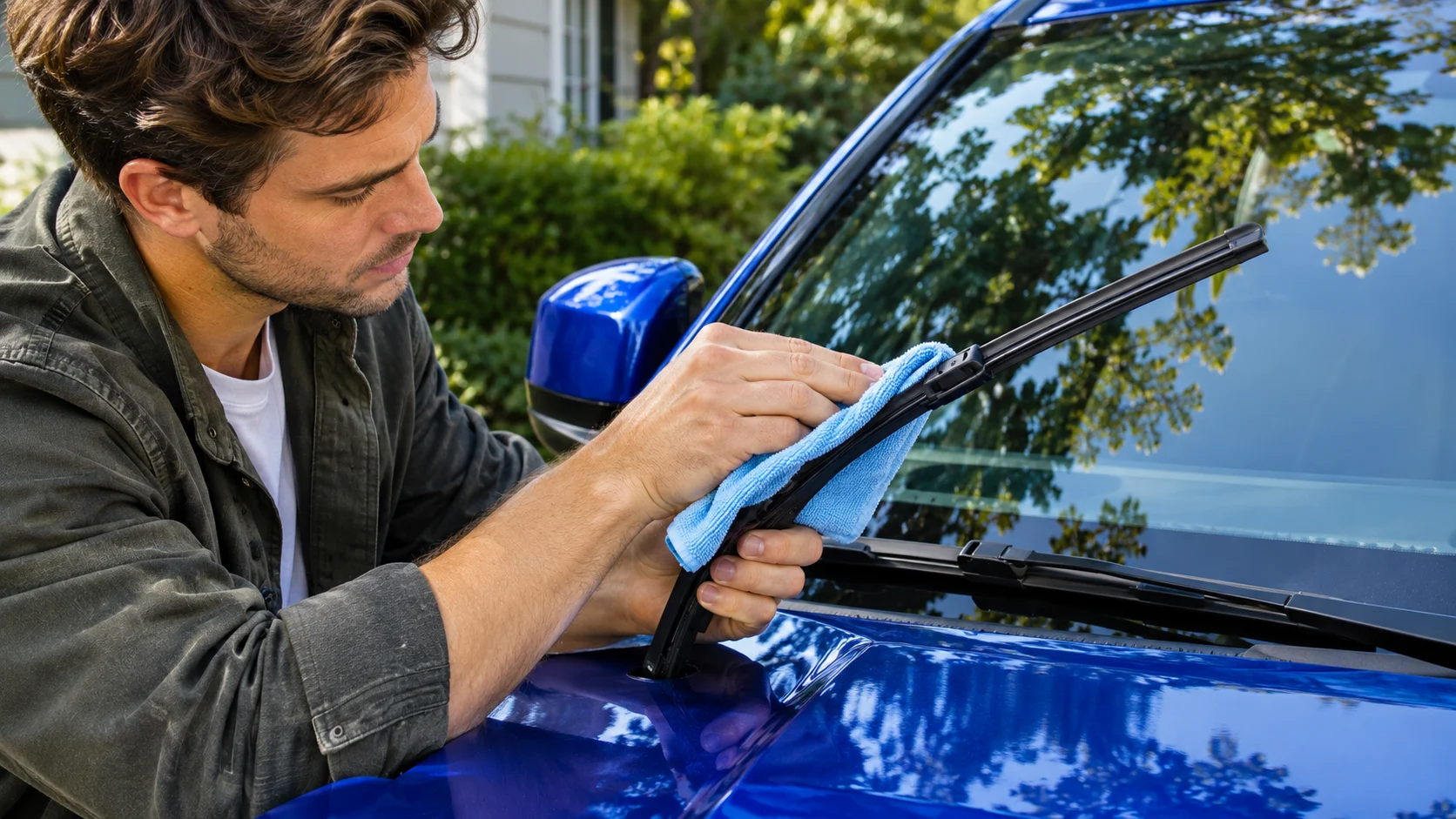
Inspect wiper blades for visible damage and note streaking or smearing during use. Follow the manufacturer’s procedure before lifting a wiper arm; some cars require a service position. Check washer-fluid instructions before topping up, and use a product suitable for the conditions where you drive.
Ask someone to help with lights
With the car safely stationary, a helper can check exterior lighting while you operate the controls. Include brake lights, indicators, headlights, and hazard lights. If a lamp fails, identify the correct replacement or arrange service. For difficult weather, read our guide to preparing your car for low visibility before departure.
Learn which checks belong in your handbook
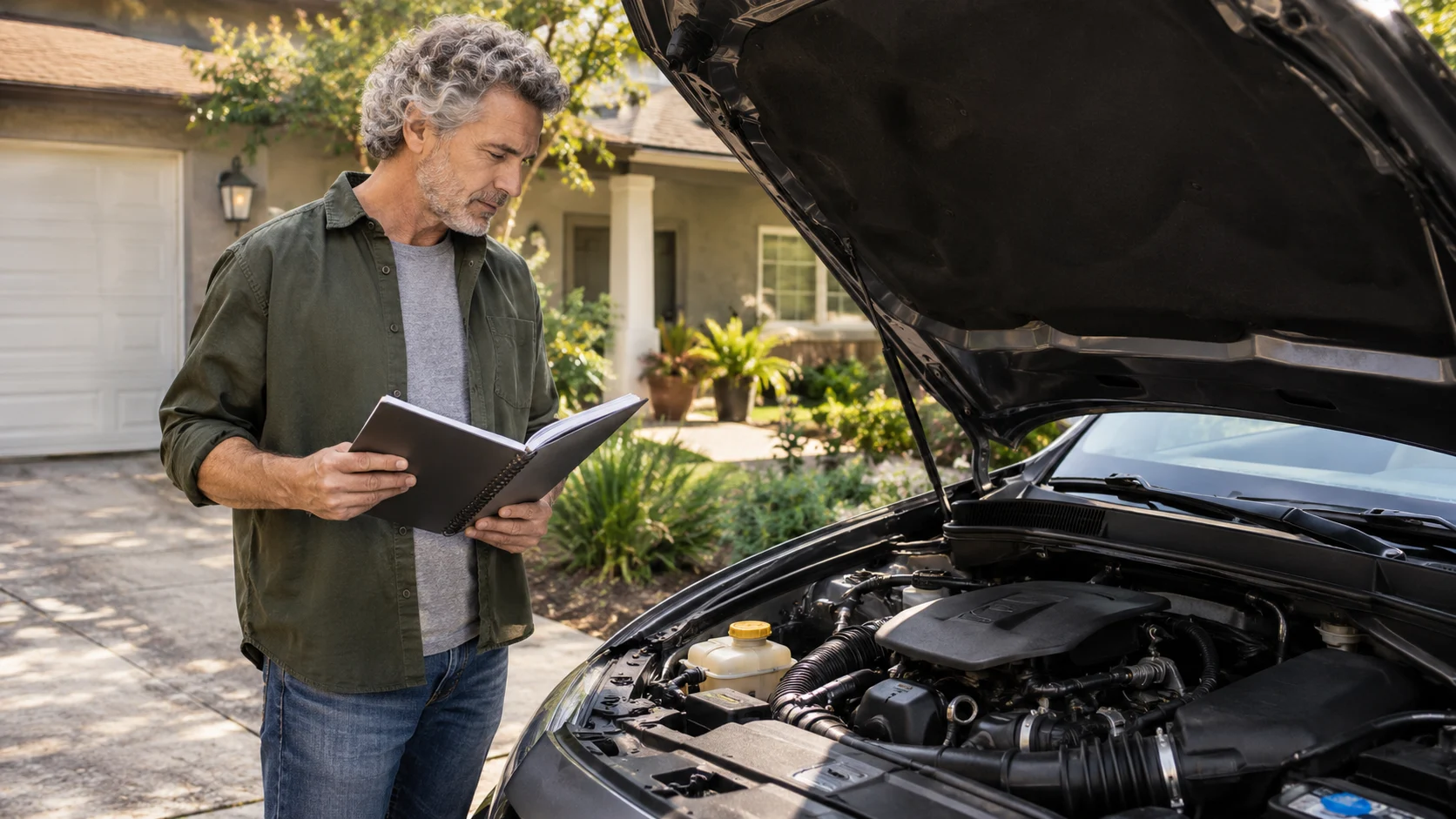
Under-hood layouts vary considerably. A familiar-looking reservoir on another vehicle is not a reliable guide to yours. Locate the maintenance section in the correct handbook and identify which checks the manufacturer expects owners to perform. Some vehicles use an electronic oil-level display; others have a dipstick and a specified checking procedure.
Never open a hot cooling-system cap. Keep hands, clothing, and tools away from moving or hot components. Electric and hybrid vehicles also contain high-voltage equipment that is not an owner inspection task. If a procedure requires removing covers, disconnecting equipment, or guessing which fluid to use, stop and obtain appropriate guidance.
Separate checking from changing
A fluid check and a scheduled replacement are different jobs. Your engine may need an oil-level check between services even when its next oil change is not due. Our article on modern oil-change intervals explains the scheduling question in more detail.
Notice what changes during ordinary use
Once you are driving, concentrate on the road. You can still notice a new vibration, unusual sound, change in steering feel, or warning message without deliberately testing the car. Avoid repeating a risky maneuver to reproduce a symptom. If braking, steering, or power delivery becomes abnormal, stop safely and seek assistance as appropriate.
Write a useful description afterward
When parked, note when the symptom began, whether the engine was cold, and what normal activity preceded it. “A vibration appeared during ordinary braking this morning” gives a workshop more context than “the car feels wrong.” Do not record notes or take dashboard photographs while moving.
For warning messages, record the exact wording and consult the handbook. Our guide to understanding your dashboard can help you organize that information. Warning colors and symbols provide clues, but the vehicle’s instructions determine the appropriate response.
Make the routine easy to maintain
Choose one recurring moment for the longer check, such as the first weekend of each month. Keep a short log with the date, mileage, observations, and action taken. A useful record distinguishes an unresolved issue from something already inspected; it should not become a list of concerns you keep postponing.
Before a longer journey, revisit the routine early enough to arrange repairs. NHTSA’s trip-preparation guidance includes practical checks for visibility, lighting, and other equipment. Use it alongside your vehicle’s instructions rather than treating a generic checklist as a service schedule.
The goal is consistency. Small checks become valuable when they lead to a clear decision: everything appears normal, something needs monitoring according to professional advice, or an issue needs attention before the next drive. Build the habit around noticing and acting, not simply ticking boxes.