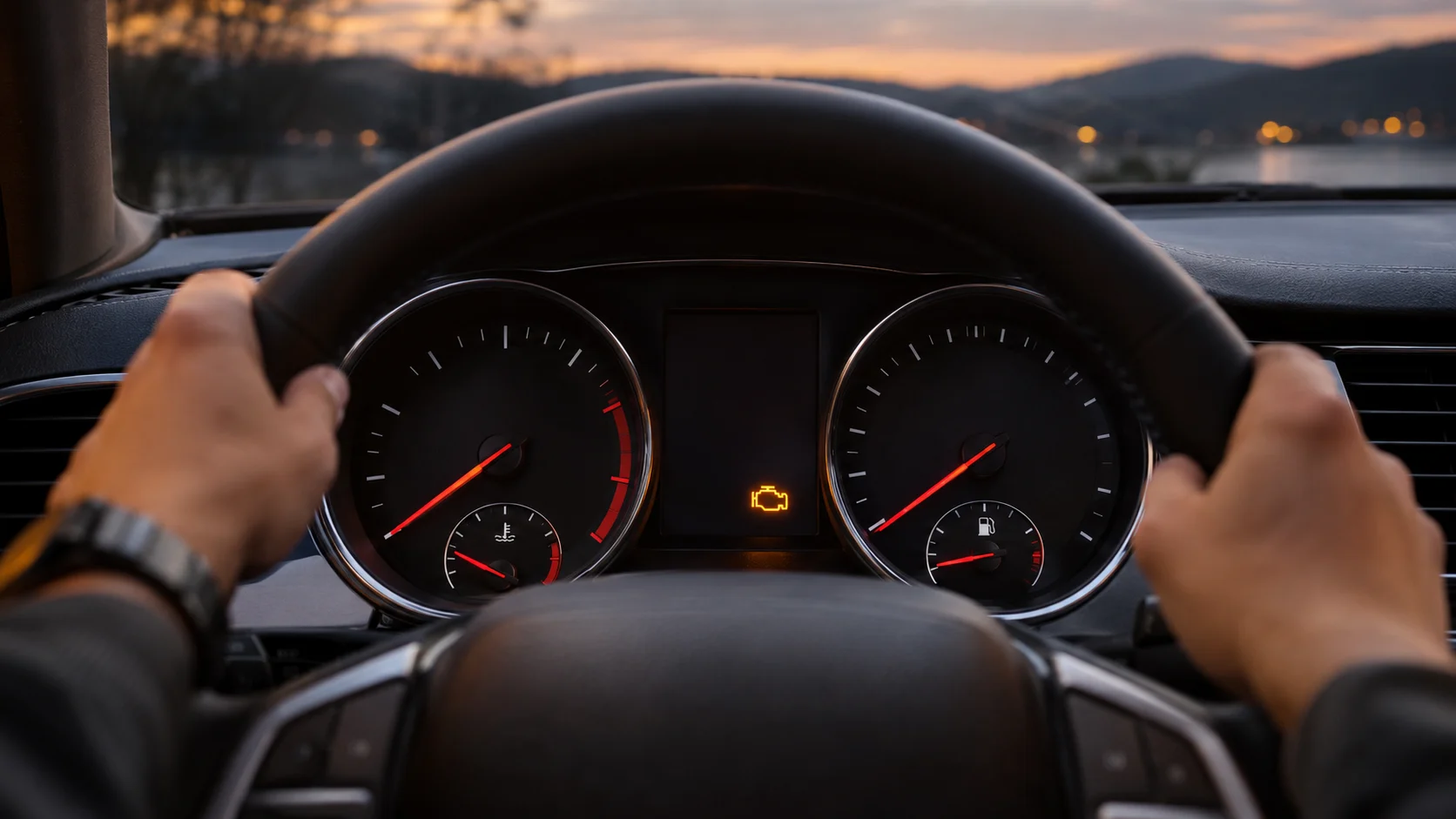
Dashboard warning lights help a vehicle communicate, but they do not all mean the same thing. Some confirm that a feature is operating. Others report a fault or tell you to stop. The most useful first step is to read the message, identify the symbol in your own vehicle’s handbook, and respond without becoming distracted from driving.
Learning the dashboard while parked is easier than trying to decode an unfamiliar alert in traffic. Take a few minutes to locate the main gauges, message area, lighting indicators, and assistance-system displays. You are building familiarity, not memorizing a universal chart that may not match your car.
Learn what normal looks like
Many indicators illuminate briefly during startup as part of a system check. Watch what happens during a normal start, following your handbook, and notice which messages remain afterward. A light appearing at startup can mean something different from the same light appearing while you are already traveling.
Use color as a clue
Red and amber often signal information that needs particular attention, while green or blue may indicate an operating feature. However, color alone does not tell you whether you can keep driving. A written instruction, flashing behavior, accompanying sound, or change in vehicle performance can alter the response.
Honda’s instrument-panel guide illustrates how a manufacturer distinguishes different indicators. Treat it as an example, not as the instructions for another vehicle. Save the correct handbook for your model year somewhere you can access when parked.
Give urgent warnings your attention
Messages involving oil pressure, overheating, braking, or a request to stop require prompt attention. Do not continue to a convenient destination simply to avoid interrupting your plans. Keep control of the vehicle, find a safe stopping location, and follow the manufacturer’s directions or contact roadside assistance.
Oil pressure is not an oil-change reminder
A maintenance reminder usually concerns scheduled service. An oil-pressure warning can indicate a more immediate problem. A manufacturer example appears in Honda’s instructions for warning indicators, which explains the potential for rapid damage with low oil pressure. Do not substitute an internet diagnosis for your vehicle’s required response.

If the car feels different too
Unusual braking, steering, severe shaking, smoke, or a strong burning smell makes the situation more concerning. Avoid experimenting with controls or repeatedly restarting the vehicle to see whether a warning clears. Arrange appropriate assistance rather than treating disappearance of a light as proof that the problem has gone away.
Understand the check-engine light’s limits
A check-engine light identifies a monitored problem, not a specific failed part. The symbol does not tell you which component to buy. A diagnostic trouble code provides additional information, but interpreting that code may require testing, service information, and an understanding of the conditions that produced it.
Record steady or flashing behavior
Whether the light stays steady or flashes is useful information for a technician. A flashing light can indicate a more serious operating condition on some vehicles. Follow the handbook immediately and describe any rough running, reduced power, or other symptoms when you request help.
Do not erase codes or disconnect the battery merely to remove a warning. That can discard information a workshop needs. Keep a record of when the warning first appeared and any recent work or unusual event. If it followed an update, also review what to check after a vehicle software update.
Read tire and assistance messages carefully
A tire-pressure warning deserves a real pressure check, not a visual guess. Follow the handbook and inspect the tires when it is safe. NHTSA explains that a tire-pressure monitoring warning concerns significant underinflation and that flashing followed by steady illumination may indicate a system fault.
Driver-assistance messages need equally careful reading. “Unavailable,” “off,” and “fault” can describe different situations. A camera may have limited visibility, a feature may not be selected, or the system may need attention. The wording matters more than guessing from an icon that looks familiar.

Do not assume assistance remains active
If a feature becomes unavailable, continue driving with full responsibility for steering, braking, and observation. Pull over safely if you need to investigate. Our guide to driver assistance features explains the difference between warnings and systems that can intervene.
Make a useful record for the workshop
Once safely parked, photograph the message if it remains visible. Include the exact wording, date, mileage, and what happened beforehand. A message that appeared after starting, after heavy rain, or during normal highway travel gives a technician different context. Do not invent a connection simply because two events happened close together.
Ask questions that lead to a next step
Explain the symptom before suggesting a repair. Ask whether the vehicle should be driven, what initial checks are needed, and whether there is a diagnostic charge. If the workshop cannot identify an intermittent fault immediately, ask what information would help if it returns and what changes require you to stop driving.
Keep the repair explanation with your service records. A clear record helps distinguish a new issue from a previously investigated one and supports your maintenance budget. It is more useful than a folder of dashboard photographs with no dates or context.
Build confidence before the next alert
Choose a quiet moment to explore the dashboard menus while the vehicle is stationary. Locate brightness settings, trip information, and the message history if your car provides one. Adjust displays so essential information is easy to read without hiding important alerts behind unnecessary screens.
If several people share the car, make sure each driver knows where the handbook is and how to contact assistance. Agree that warning messages will be reported rather than dismissed. A brief handover can prevent one driver from assuming another person already arranged an inspection.
The best dashboard habit is simple: notice the message, maintain control, consult the correct instructions, and take the next appropriate action. You do not need to become a technician. You need enough familiarity to recognize when the vehicle is asking for attention and enough patience to respond safely.