
A practical car maintenance budget turns an occasional large bill into something you can plan for. Start with your vehicle’s service schedule, add known wear items, and keep a separate reserve for unexpected repairs. The right amount depends on your car, mileage, local labor rates, and what has already been replaced.
You do not need a perfect prediction of every future repair. You need a realistic view of the next few months and a process for updating it. A simple spreadsheet or notebook can work just as well as a dedicated app if you use it consistently.
Separate maintenance from other ownership costs
Fuel, charging, insurance, registration, parking, and loan payments all affect what a car costs to own. However, mixing them with maintenance can make it difficult to see whether you are setting enough aside for service. Give maintenance its own line, even if all the money sits in the same account.
Create three working groups
Use scheduled service for work listed in the manufacturer’s schedule, wear items for parts whose condition needs assessment, and repairs for faults that require diagnosis. These groups serve different purposes. An upcoming scheduled service is a foreseeable expense; an unexplained vibration is a problem to investigate, not an amount to guess.
Keep optional improvements separate too. New accessories, cosmetic work, and convenience upgrades should not quietly consume money reserved for essential maintenance. Naming the categories clearly makes the next decision easier when a workshop recommendation arrives alongside something you simply want to improve.
Build a twelve-month maintenance forecast
Find the correct service schedule for your model, powertrain, and usage. Note your current mileage and estimate how far you will drive over the coming year. Check both time and mileage requirements. The FTC’s auto repair guidance recommends using the manufacturer’s schedule and asking shops to explain additional recommendations.
Use local estimates instead of national averages
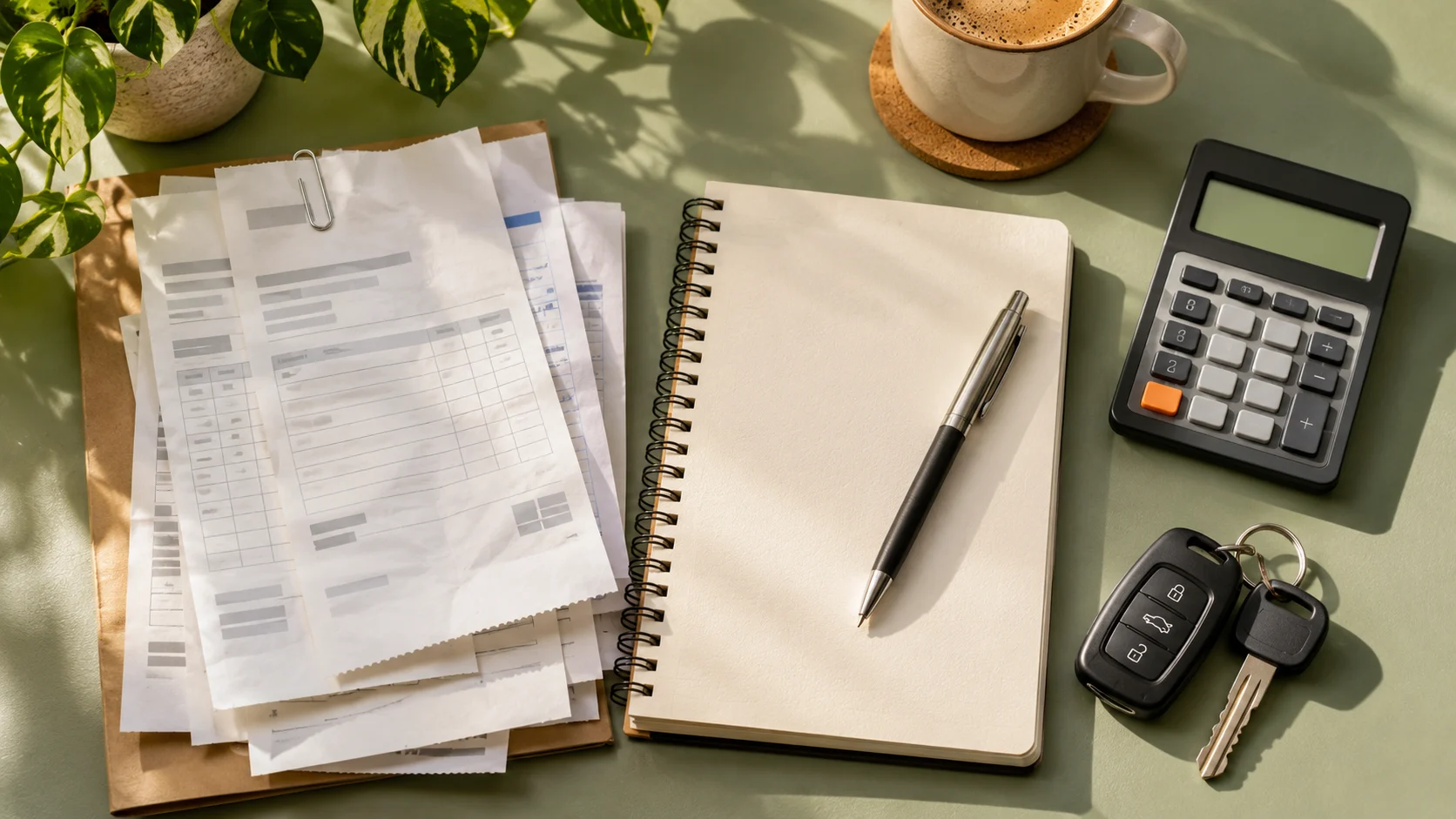
List the work likely to fall due, then ask suitable workshops for current estimates. Record what each estimate includes, such as parts, labor, taxes, and related inspections. A low headline price is not useful if it covers a different job. Treat an estimate as planning information until the shop confirms the scope.
Keep the assumptions visible
Write down the mileage assumption and date beside each figure. If your commute changes or a planned trip adds substantial distance, you can revise the forecast. Our explanation of modern oil-change intervals can help you avoid building the plan around an outdated rule of thumb.
Turn the forecast into a monthly target
Divide foreseeable costs by the months available before they are due. If you have twelve months, spread the estimate over twelve contributions. If a service is due in three months, use three. The timing matters as much as the total; a yearly average can conceal an expense that arrives almost immediately.
For illustration only, suppose your own estimates total $720 for the next year. That represents $60 per month. If you also choose to build a $600 repair reserve during that year, another $50 per month would bring the planned contribution to $110. These are arithmetic examples, not predictions of what your vehicle should cost.
Account for the starting balance
Subtract money already reserved before deciding how much to add. After paying a bill, record the remaining balance and the next known expense. The budget becomes more useful when it tells you what remains available rather than simply displaying how much you have spent since January.
Make repair estimates easier to compare
When a problem develops, describe the symptom and ask what diagnosis is required. Find out whether the diagnostic charge is separate from the repair and how additional work will be authorized. Ask for the proposed work in writing before deciding. The aim is clarity, not negotiating away a necessary safety repair.
Compare the same job
Check whether competing estimates use comparable parts, include the same labor, and address the same concern. Ask about the repair warranty and any conditions attached to it. California readers can review the Bureau of Automotive Repair’s consumer information for guidance on choosing a shop and navigating repairs.

For a major recommendation, ask which findings support it and whether related work is necessary now or can be planned separately. A second opinion may be useful when the scope is unclear. Do not continue driving an unsafe vehicle merely to obtain another quotation; ask how it should be transported.
Use records to improve the next decision
Keep invoices with the date, mileage, work performed, and parts information. Store photographs or diagnostic reports with the relevant invoice rather than in a separate folder with no explanation. If you change workshops, a clear history helps the next technician understand what has already been inspected or replaced.
Distinguish completed work from recommendations
A service invoice may list both work performed and work suggested for later. Mark that difference in your own record. Otherwise, you may mistakenly assume an item was replaced or budget for something already completed. Add a follow-up date for any recommendation you and the workshop agree should be revisited.
Your regular car maintenance checks can support the record by identifying changes between services. If an alert appears, use our dashboard guide to organize the symptoms before contacting the shop. Good notes improve communication; they do not replace diagnosis.
Review the plan without postponing essential work
Revisit the budget after each service and whenever your driving pattern changes. A longer commute, a second household driver, or a planned road trip can change when maintenance falls due. Updating a small plan regularly is easier than rebuilding a neglected one after a large bill.
Separate a temporary funding gap from a decision that work is unnecessary. If an important repair is unaffordable, ask the workshop to explain the safety implications and available next steps. Do not rely on a generic online list to decide that brakes, tires, or an urgent warning can wait.
A smarter maintenance budget gives you a clearer picture, not a guarantee against surprise costs. Track the next service, keep a reserve that fits your circumstances, and use real invoices to improve future estimates. Over time, that record can help you judge whether the car still fits your needs and resources.