
Unfamiliar route planning is easiest before the car moves. Review the journey, understand the final approach, and set up navigation while parked. Then give yourself permission to miss a turn rather than make a sudden maneuver. A small detour is usually easier to manage than a rushed decision in traffic.
You do not need to memorize every street. Focus on the parts most likely to require an early choice: major interchanges, toll routes, restricted entrances, and parking. A little preparation leaves more attention available for the road when the surroundings are new.
Check the destination beyond its street address
A map pin may identify a building without showing the entrance you need. Large campuses, hospitals, hotels, and shopping areas can have several access points. Confirm the correct entrance and whether your destination has a separate vehicle access road, parking structure, or collection area.
Plan the last part first
Look at the final few turns and where you can lawfully stop. If you are collecting someone, agree on a specific meeting place before leaving. Ask about access restrictions or parking arrangements where relevant, especially if your vehicle carries a roof box or is taller than an ordinary car.
Save a useful contact number and the destination details somewhere accessible while parked. If the navigation pin is wrong, you can call from a safe location rather than circle repeatedly while trying to interpret a message. Treat arrival as part of the journey, not an afterthought that starts at the final turn.
Review the route and current conditions
Compare the suggested route with your vehicle, confidence, and travel needs. The quickest estimate may include roads you would rather avoid or a complicated interchange near the destination. A slightly longer route can be a sensible choice if it suits your circumstances better.
Use official information where available
Check current road conditions and closures through the relevant road authority. For California travel, Caltrans QuickMap provides traffic and road-condition information. Review the relevant layers and timestamps rather than assuming every symbol describes the same type of delay.
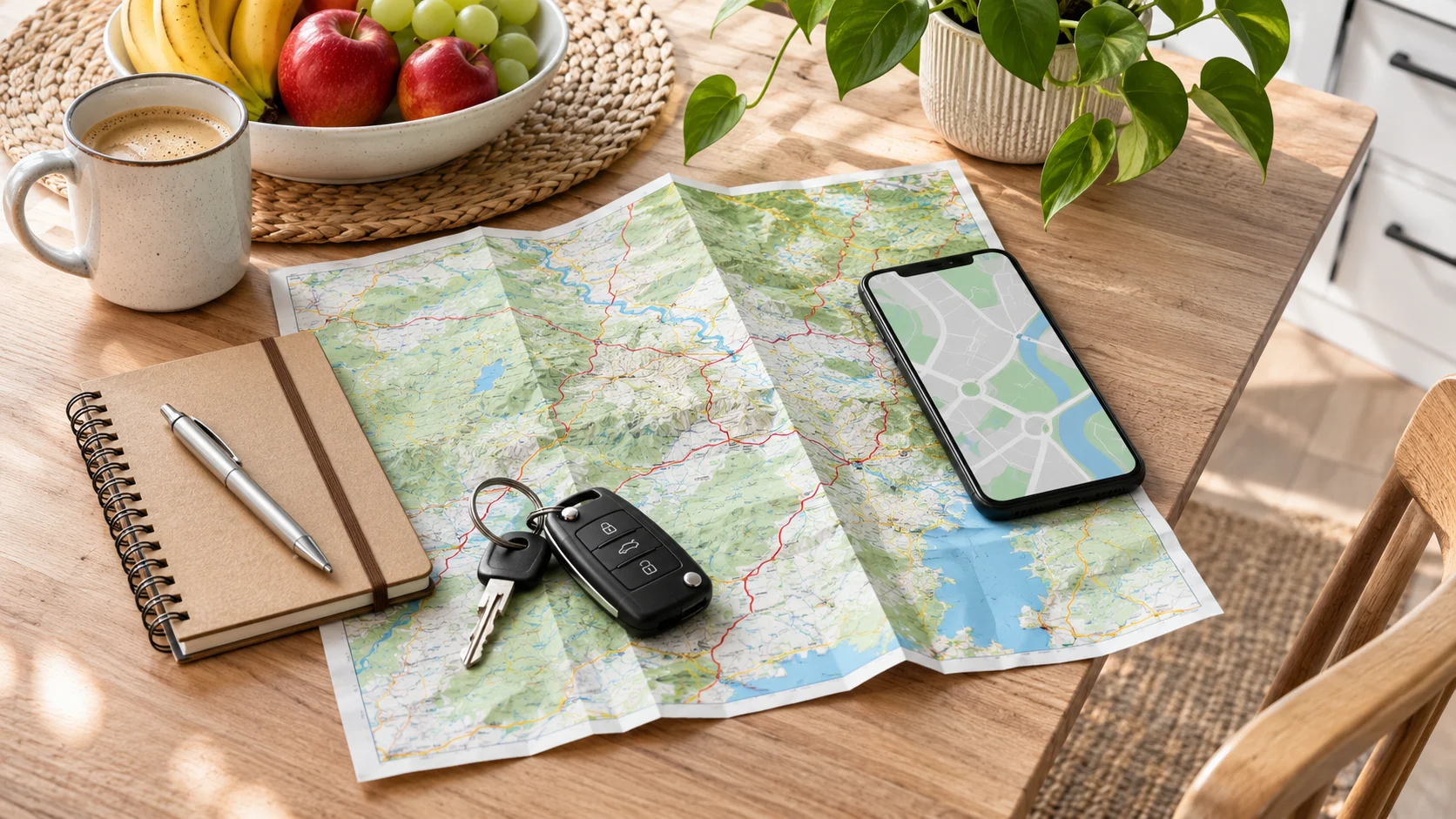
Allow time for conditions to change
An estimate is not an appointment with the road. Add a practical margin for traffic, stops, and the final approach. If the trip involves poor visibility, read our fog-driving preparation guide. A route that looks straightforward in daylight may need a different plan when conditions deteriorate.
Set up navigation before moving
Enter the destination, review the first instructions, and set the audio volume while parked. Position any permitted device so it does not obstruct your view. Make sure its power arrangement is secure and that cables cannot interfere with vehicle controls.
Choose who handles changes
If a passenger can help, agree that they will manage route questions and messages. If you are traveling alone, plan to stop safely before entering a new address or investigating a confusing instruction. Voice guidance can help, but it does not make every interaction distraction-free.
NHTSA identifies navigation-system interaction as a potential distraction. Avoid treating a red light or slow traffic as an opportunity to reorganize the route. If the car’s menus recently changed, review your post-update settings before departure.
Keep road information ahead of app instructions
Read signs, lane markings, and the situation around you. Navigation guidance can be delayed or unsuitable for the conditions you encounter. Do not enter a restricted road, make an unlawful turn, or follow an unsafe path merely because a device suggests it.
Accept a missed turn calmly
If you cannot reach the correct lane safely and lawfully, continue and let the route recalculate. Avoid stopping abruptly, reversing, or crossing several lanes to recover a turn. Give other road users a predictable path while you work toward the next safe opportunity.
At a complicated junction, reduce competing distractions. Ask passengers to pause a conversation if necessary, and avoid changing music or climate settings during the approach. Your aim is to make one road decision at a time. An unfamiliar route becomes harder when several small tasks compete for attention at once.

Plan stops that support the whole journey
Choose possible rest, fuel, or charging locations before they become urgent. Check access and opening arrangements when you rely on a particular stop. If you drive an EV, our guide to everyday charging and trip stops explains why a backup location is useful.
Recognize when you need a break
Concentration can drop during a long or demanding trip. NHTSA’s drowsy-driving guidance emphasizes adequate sleep and warns that caffeine alone is not a reliable solution to serious tiredness. If you feel drowsy, find a safe place to stop rather than trying to finish the route through determination.
Stops also create space to check messages, review a diversion, or adjust the next leg. Choose a lawful parking area away from moving traffic. A shoulder is not a convenient planning desk; use an appropriate stopping place whenever the situation allows.
Make the next unfamiliar trip easier
After arrival, save the entrance or parking location that worked. Note any junction that was confusing and review it later, when you are no longer responsible for driving. Familiarity develops through experience and preparation, not through criticizing yourself for a missed turn.
If the destination is one you will visit regularly, keep a short note about access, parking, and a suitable alternative route. Share useful information with another household driver without assuming they have the same preferences or experience. A route that feels comfortable to one person may need more preparation for another.
For an important appointment, decide in advance what you will do if the journey takes longer than expected. Save the destination’s contact details and make any necessary call only when safely parked or through a passenger. Having that small contingency can reduce the temptation to rush the final miles or make an unsafe turn to recover a few minutes.
Before your next trip, repeat the same sequence: confirm the entrance, review conditions, set navigation, and allow a margin. You cannot predict every change on the road. You can make the journey more manageable by resolving avoidable questions early and keeping your attention on driving when it matters most.