
A road trip checklist works best when it starts several days before departure. That gives you time to arrange service, adjust the route, and gather what your passengers need. Leaving everything until the night before turns manageable decisions into last-minute pressure.
This week-before-departure plan combines vehicle preparation with practical travel organization. Adapt it to your car, destination, weather, and passengers. It does not replace the vehicle’s maintenance schedule or a professional inspection when there is a warning, damage, or an unresolved concern.
Seven days before: review the vehicle’s needs
Check the next scheduled service against the distance you expect to cover. Review any recent warning, unusual noise, or change in normal operation. If something needs diagnosis, arrange it early and explain the planned journey. A workshop may need time for parts or follow-up checks.
Confirm the status of known issues
Do not assume that an issue mentioned during the last service was repaired. Read the invoice and distinguish completed work from recommendations. Keep the workshop’s explanation with your records. Our guide to planning maintenance costs can help organize foreseeable work before a trip.
Check for outstanding safety recalls using the NHTSA recall lookup and follow the manufacturer’s directions. If a campaign affects your vehicle, ask about the required remedy and any driving restrictions rather than assuming the trip can proceed unchanged.
Five days before: check tires, lights, and visibility
Review tire condition and cold pressures according to the vehicle’s instructions. Include the spare or learn what the supplied repair kit can and cannot do. If you find damage, abnormal wear, or recurring pressure loss, arrange an inspection before departure.
Check the equipment you will depend on
Confirm that exterior lights work and that windows, mirrors, and wipers provide a clear view. Find the demisting controls before you need them. The NHTSA trip-preparation checklist provides a broad starting point for these checks, alongside your vehicle’s handbook.

Use the right procedure for fluids
Check only the owner-serviceable items identified by the manufacturer, using the correct procedure and products. Never open a hot cooling-system cap. If you are uncertain, ask a qualified technician. Our routine car-check guide can help you organize observations without turning them into unsupported diagnoses.
Three days before: build a realistic travel plan
Review the route, likely conditions, and places to stop. Think about the needs of the people traveling, not just the shortest arrival estimate. A trip with children, older relatives, or someone who needs regular medication may require a different pace from a solo journey.
Check the final approach
Confirm the destination entrance and parking arrangements. If you are staying overnight, find out when check-in is available and where the car can be left. Save essential details for offline access where practical. Our guide to preparing for an unfamiliar route covers the decisions worth resolving before departure.
For electric vehicles, identify compatible charging locations and alternatives along the route. For any vehicle, avoid planning every stop around the smallest possible fuel or energy margin. A useful plan can absorb a delay, a closed facility, or a change in conditions without creating immediate pressure.
Two days before: organize passengers and luggage
Gather the items you need and check the vehicle’s loading instructions before packing. Keep heavy items secured and avoid loose objects that can move around the cabin. Do not block the driver’s view or interfere with seat belts, airbags, or access to essential controls.
Check seating arrangements
Make sure each passenger has an appropriate seating position and restraint. If children are traveling, use the instructions for both the child restraint and the vehicle. NHTSA’s car-seat guidance provides information on choosing and using suitable restraints and finding inspection assistance.
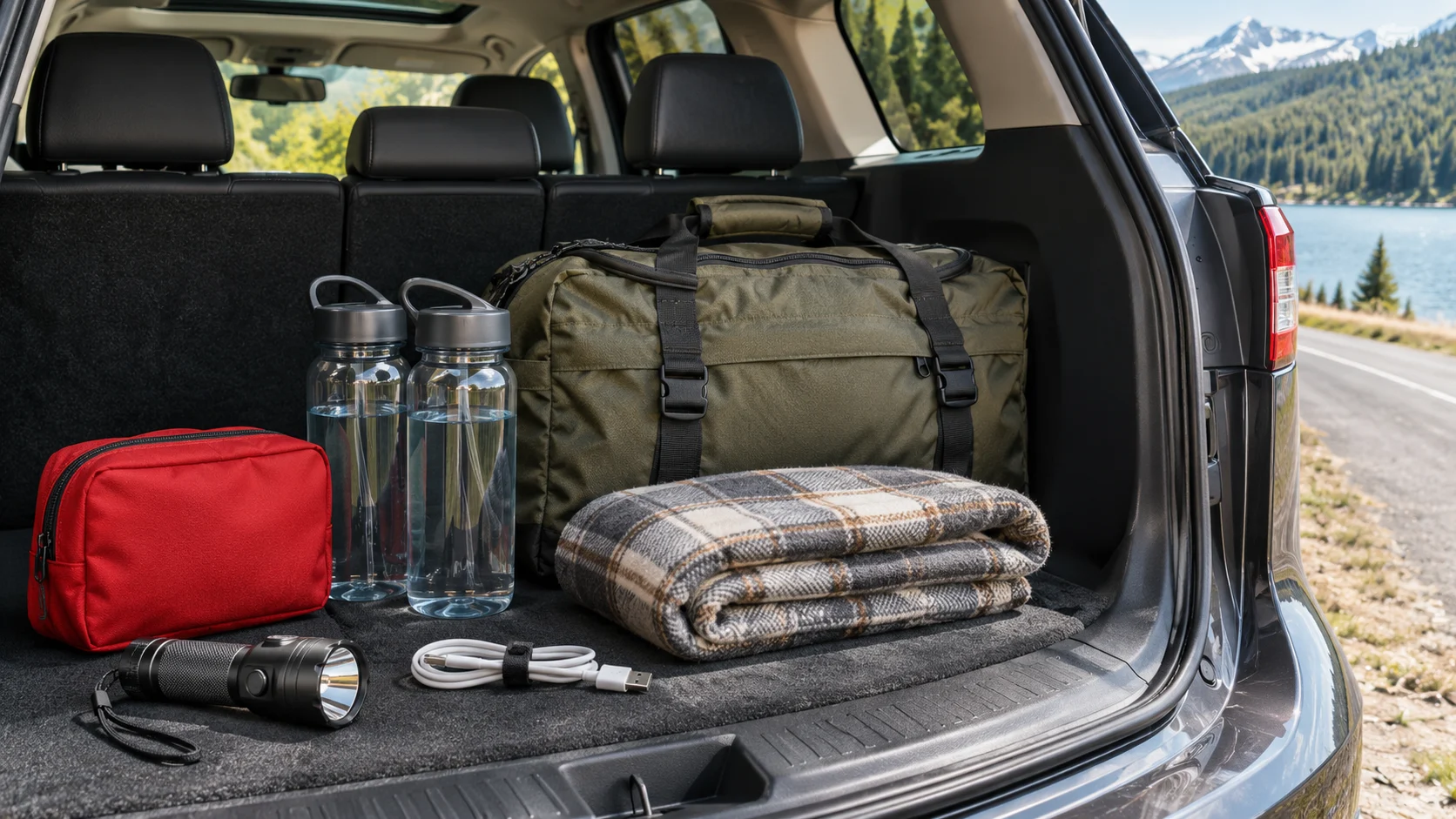
Keep essential medication, travel documents, water, and items needed during stops accessible. Pack a practical roadside kit for your route and conditions. Check that you know where assistance details are stored and how to reach them if the phone you normally use is unavailable.
The evening before: finish preparation and leave time to rest
Review the forecast and current route information, then finish routine packing early. Confirm any fueling or charging plan, check device batteries, and download useful journey information if reception may be limited. Set your destination while the car is stationary rather than saving it for a rushed departure.
Make rest part of the schedule
Choose a departure time that supports adequate sleep. NHTSA’s drowsy-driving advice explains why rest matters and why stimulants are not a dependable replacement. If a driver is unwell, unusually tired, or affected by medication, reconsider the plan.
Agree on the first stop and who will help with navigation. Share the broad itinerary with someone who needs it, but avoid turning every minute into a deadline. A flexible arrival window is more useful than a schedule that encourages rushing when the journey inevitably takes longer than expected.
Departure morning: make one calm final check
Walk around the car before loading the last items. Look for new damage, visible tire problems, obstructions, or a door that has not closed properly. Check that luggage is secure and that essential equipment remains accessible. Adjust seats, mirrors, and navigation before moving.
Read any startup warning rather than dismissing it because you are ready to leave. If an unresolved issue requires attention, deal with it before the trip. A packed car and a booking at the other end do not change the vehicle’s operating requirements.
Keep the checklist short enough that another driver can follow it. Assign each task to one person and mark when it is completed, especially where responsibility is shared. “Someone checked the tires” is less useful than a dated note from the person who did the check. Clear ownership prevents both duplicated effort and important tasks being overlooked.
Once everyone is ready, begin with enough time to settle into the drive. Revisit the plan at sensible stops and make changes while parked. The value of a week-before-departure checklist is not that it guarantees an uneventful journey. It gives you time to resolve foreseeable problems and make thoughtful decisions before the pressure of travel begins.